
The pattern behind everything.
I have been building things that did not exist since I was seven years old. Not because I was told to. Because every problem I looked at closely enough eventually showed me a gap, and I have never been able to see a gap and walk past it.
Four internships across Maruti, Wipro, Mahindra and Deloitte. Two patents filed before graduation. Six AI systems built from scratch at one of the world's biggest consulting firms, with no prior background, because I saw the same gap I always see and did the same thing I always do. A mechanical engineering degree I treated as a floor, not a ceiling.
Patroclus Systems is where all of that goes next.
Closed-loop ecosystems for unwalkable terrain.
Not a robot. An ecosystem. Ground and air units that share one intelligence and go where nothing else can.
Every triangle in our mark carries one word in Morse. Together they are the only three things we ask of anything we build.
Perceive
See what a human eye cannot. Below the ground. Around the ridge. Through the dark. An ecosystem is only as good as what it notices before anyone else does.
Protect
Every system we build exists to put distance between a human being and the moment something goes wrong. That is the only reason any of this is worth building.
Persist
The mission does not end when one part of the system does. Intelligence that survives is worth more than hardware that does not.
A rover light enough for one operator to deploy alone. It crosses terrain that stops wheeled and tracked vehicles on its own power, and it deploys a small aerial team to scout ahead of it. Together they survey ground no person should have to walk, in places where nothing else can reliably be sent first.
The rover senses what is beneath it. The aerial units see what is ahead of it. Everything they find becomes one shared picture, updated in real time, available to whoever needs it next.
The payload changes with the mission. What stays constant is the ecosystem underneath it.
First principles, every time.
The approach behind every system I've shipped, from production AI to autonomous robotics.
Solve for the hardest constraint first
Architecture must survive its worst operating limits, GPS-denied, -30°C, before it scales. Deferring the hardest constraints guarantees systemic failure.
Every function has a failure mode
Unbounded capability guarantees eventual catastrophic failure. Reliability demands strict constraints built directly into the foundation.
Verify through execution
Rely on physical testing, not published claims. Theoretical capabilities are irrelevant until they survive empirical validation.
Ensure systemic resilience
Component failure is inevitable; system failure is a design flaw. The intelligence and data architecture must remain intact regardless of local hardware degradation.
Ship to real conditions
Prototype, field, iterate. If it doesn't hold up in the environment it was built for, it doesn't work.
Measure what matters
False-alarm rate. Time saved. Lives protected. The metric has to match the problem.
I always knew what I wanted to build.
Everything else was preparation.
Not a pivot. Not a discovery. Fourteen moments, across eleven years, where I picked up the specific skill this company would eventually need.
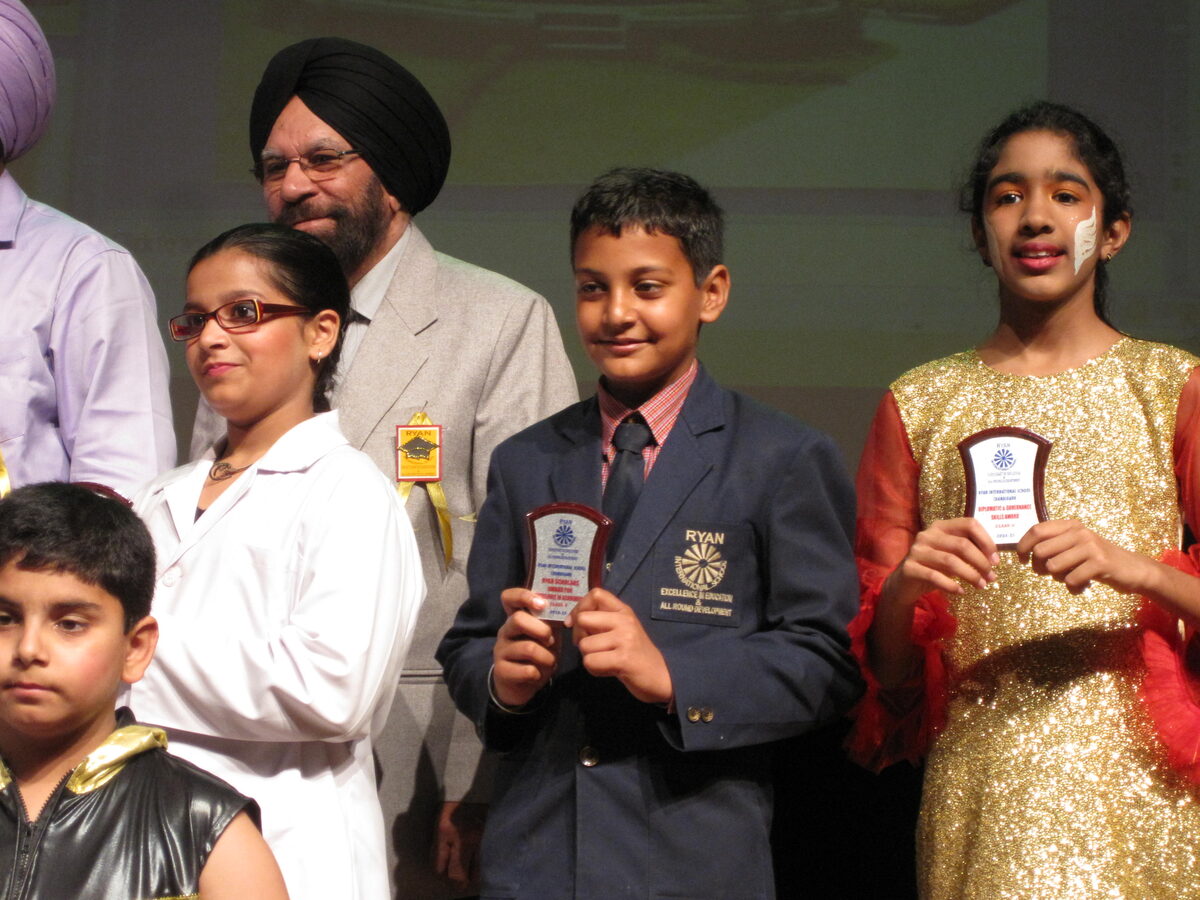
The first prize for building something, not for knowing something.
I won this at ten years old for a science and technology project. It was the first time school rewarded me for making a thing work rather than for memorising a correct answer, and it is probably why I have preferred the first over the second ever since.
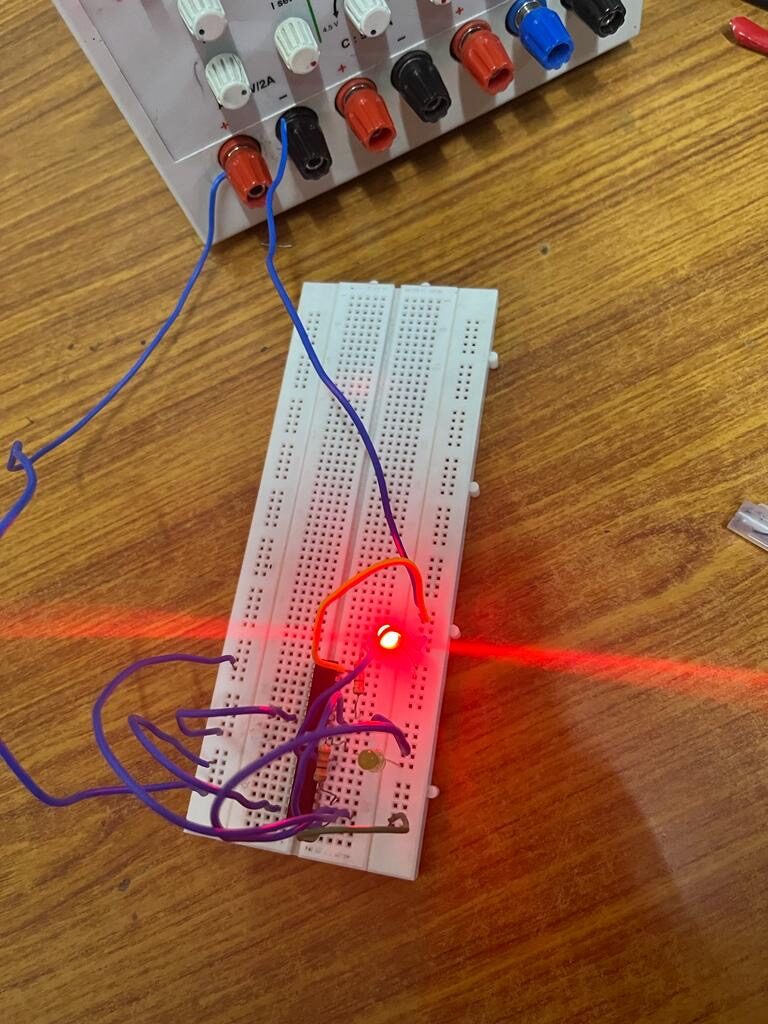
Learning that a circuit is just a question with a definite answer.
A breadboard, some jumper wires, a resistor, an LED. This was the first time I built something electrical from a diagram and watched it do exactly what the diagram promised. Simple, but it is where I first learned to trust that if you wire something correctly, it works, and if it does not work, you wired something incorrectly.
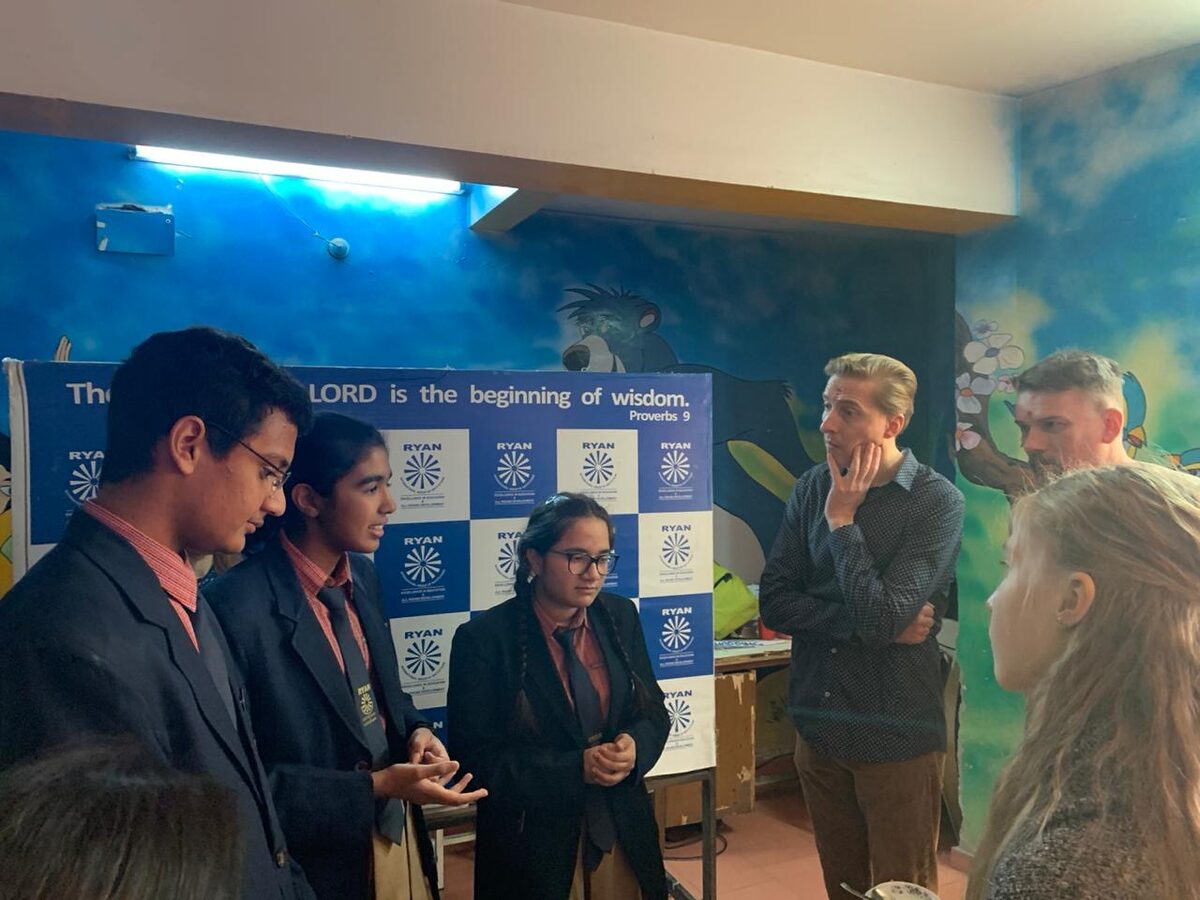
Learning to explain a real, working system to people who did not build it.
A group of visiting delegates came through our lab and I was the one who ended up walking them through what we had built. I had to explain how it worked without assuming anyone already knew the terms we used every day inside the lab. Translating something technical into something anyone could follow turned out to matter more than the build itself.
Learning that a working prototype and a good idea are not the same thing.
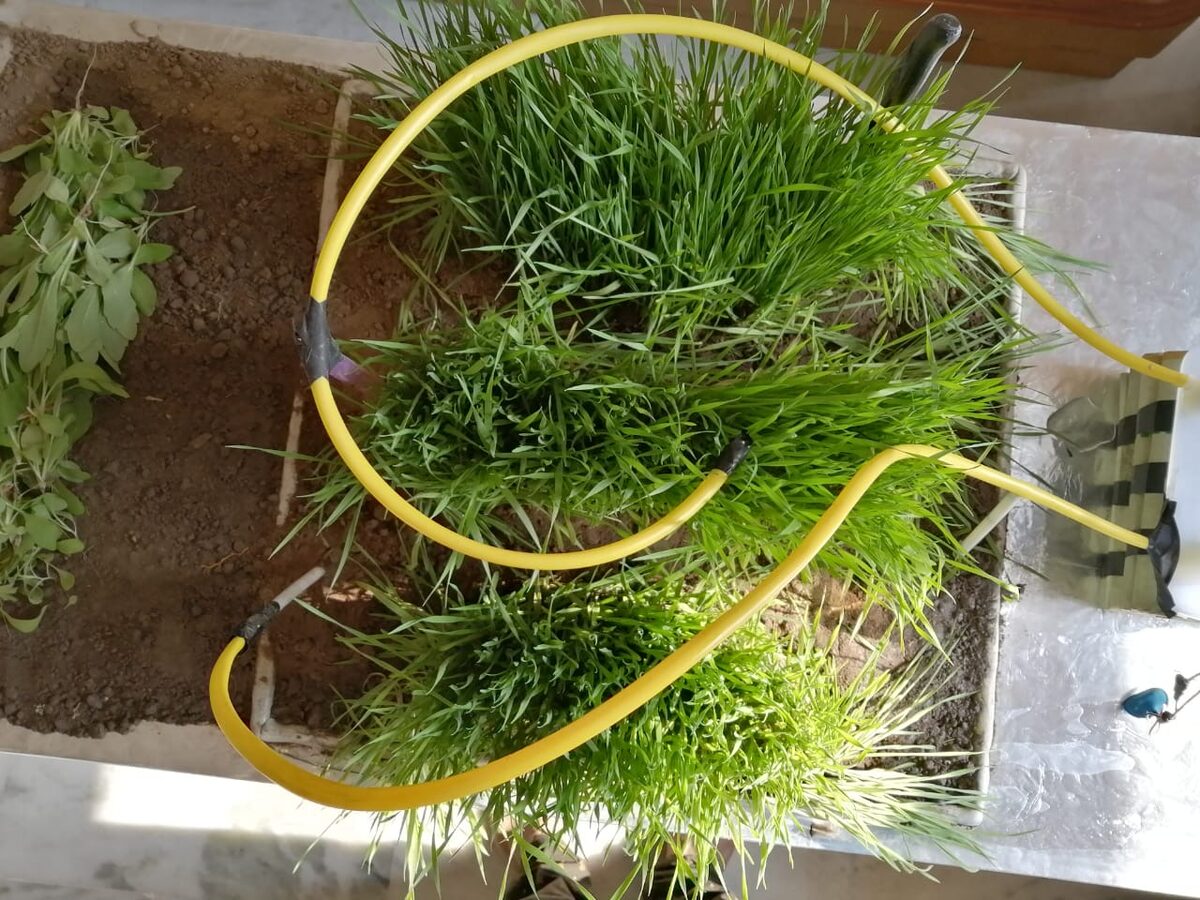
This drip irrigation model reached the national round of the exhibition, which meant it had to actually hold water pressure and deliver a measured amount to each plant, not just look convincing in a poster presentation. It was my first real lesson in the distance between a good idea and a thing that works outside a classroom.
Learning to model everything before manufacturing any of it.
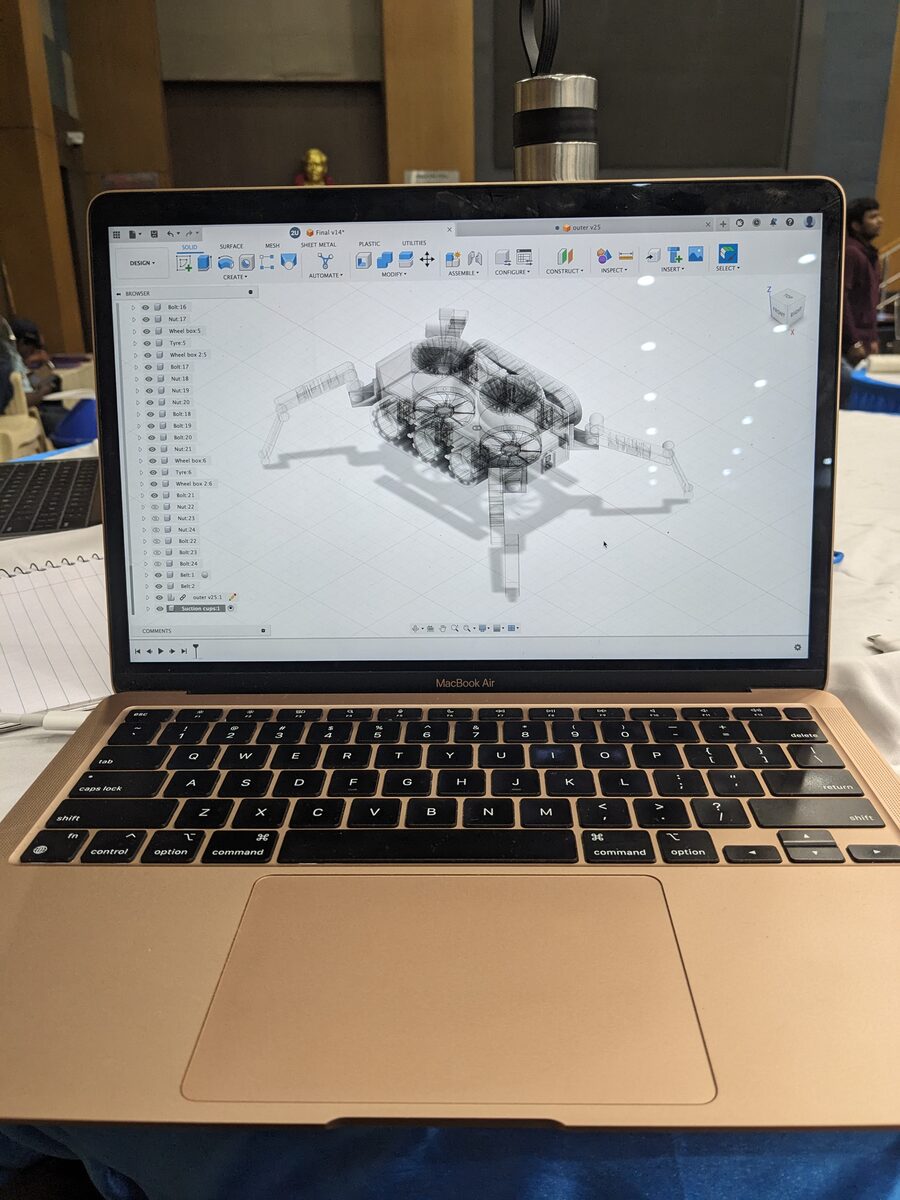
By this point I was building full CAD assemblies for our vehicles in Fusion 360, modelling every bracket, bolt, and tolerance before a single part was machined. It is a slower way to start a build, but it means expensive mistakes happen on a computational environment rather than in production.
Learning how a vehicle actually perceives the world around it.
On the ARC Level 3 build I worked on the sensor mounts and structural integration for the LIDAR and depth cameras, and redesigned the steering assembly for faster response. Autonomy gets discussed as a software problem, but half of it is making sure the sensor is physically mounted rigidly enough for the software to trust what it is seeing.
Learning that most inefficiency is invisible until someone actually times it.
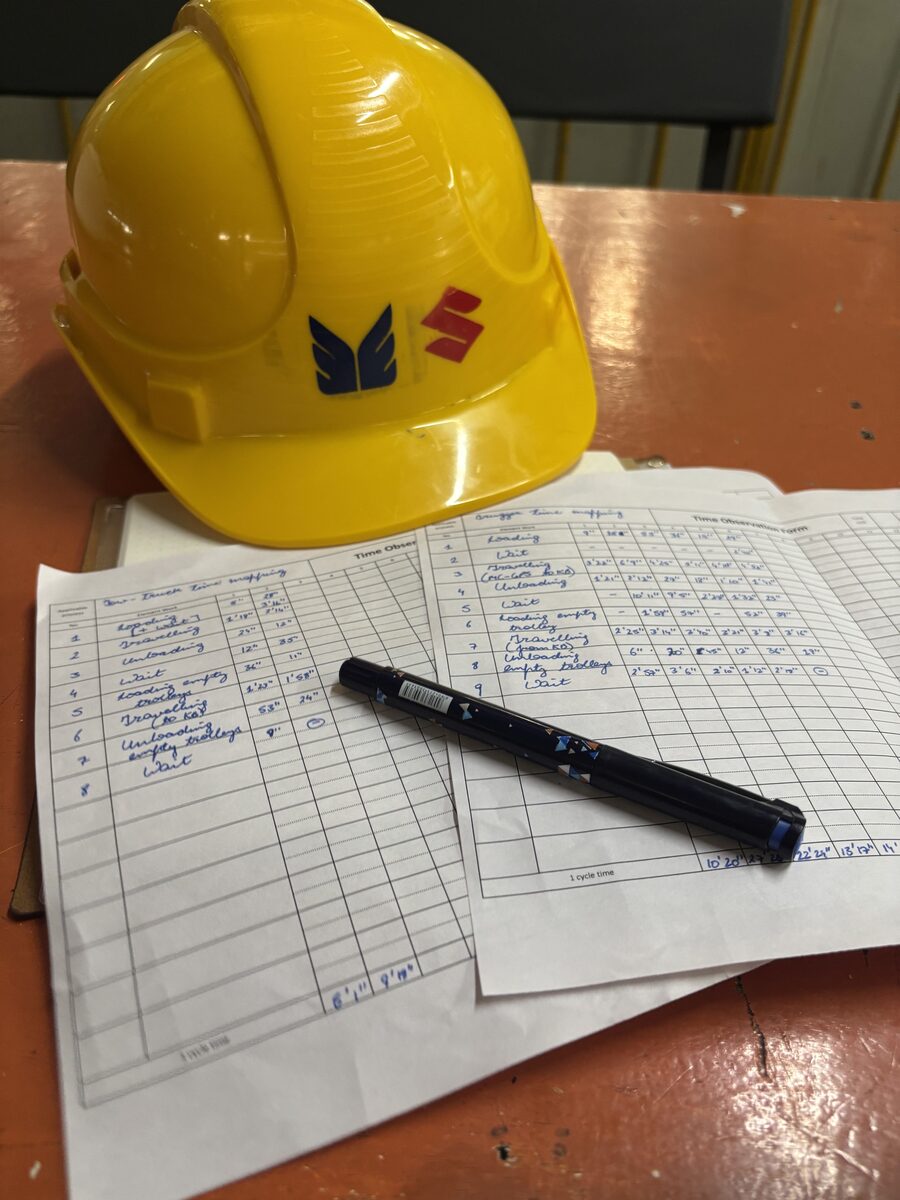
I spent this internship on the shop floor at Maruti's Gurgaon plant, timing tow truck and material handling cycles that nobody had measured before. The lesson was not really about logistics. It was about how optimization is impossible without first defining the exact operational reality through direct measurement.
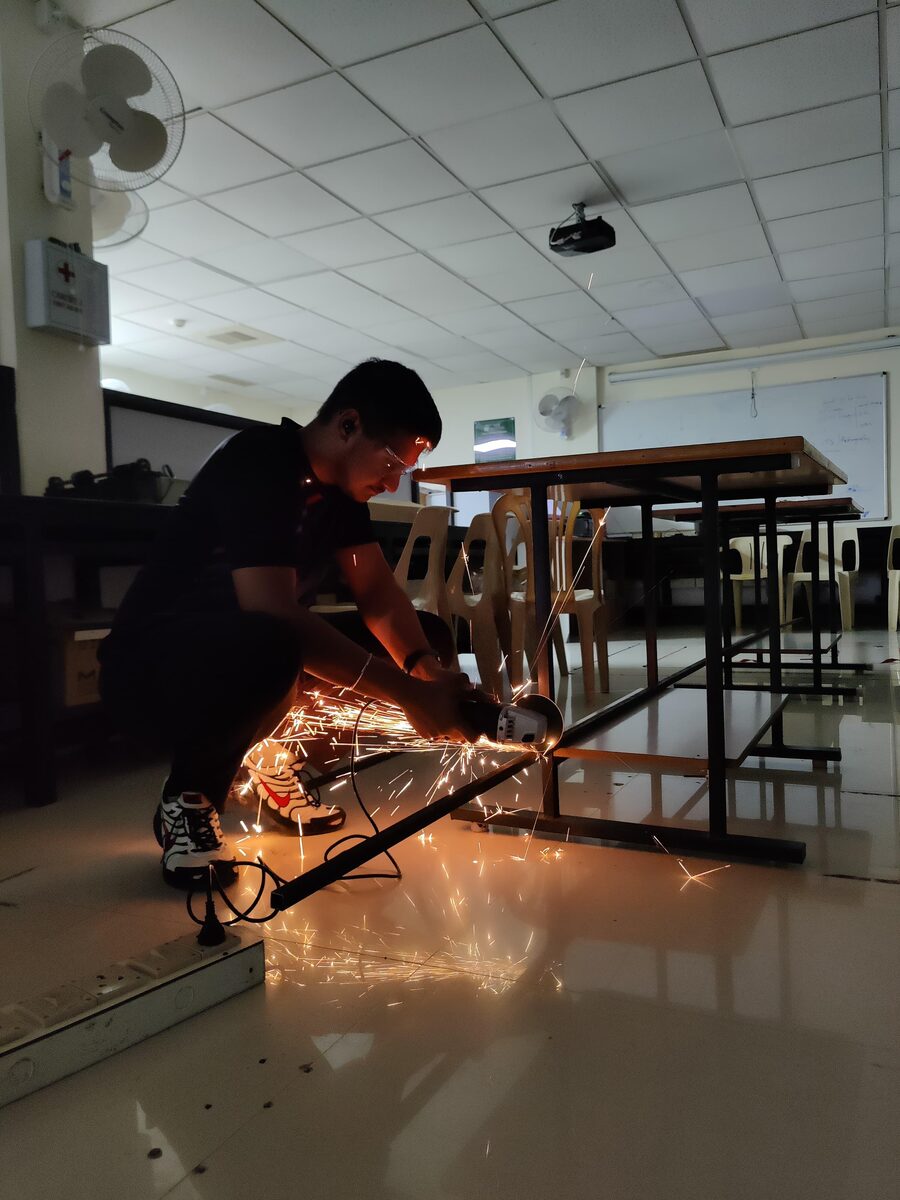
Learning to fabricate, not just design.
At some point every mechanical engineer has to stop drawing and start cutting metal. This is me machining the chassis for our Qubi ground robot. Nobody assigned it to me specifically, the part needed to be made and I already understood the tolerances from the CAD file, so it made sense to do it myself.
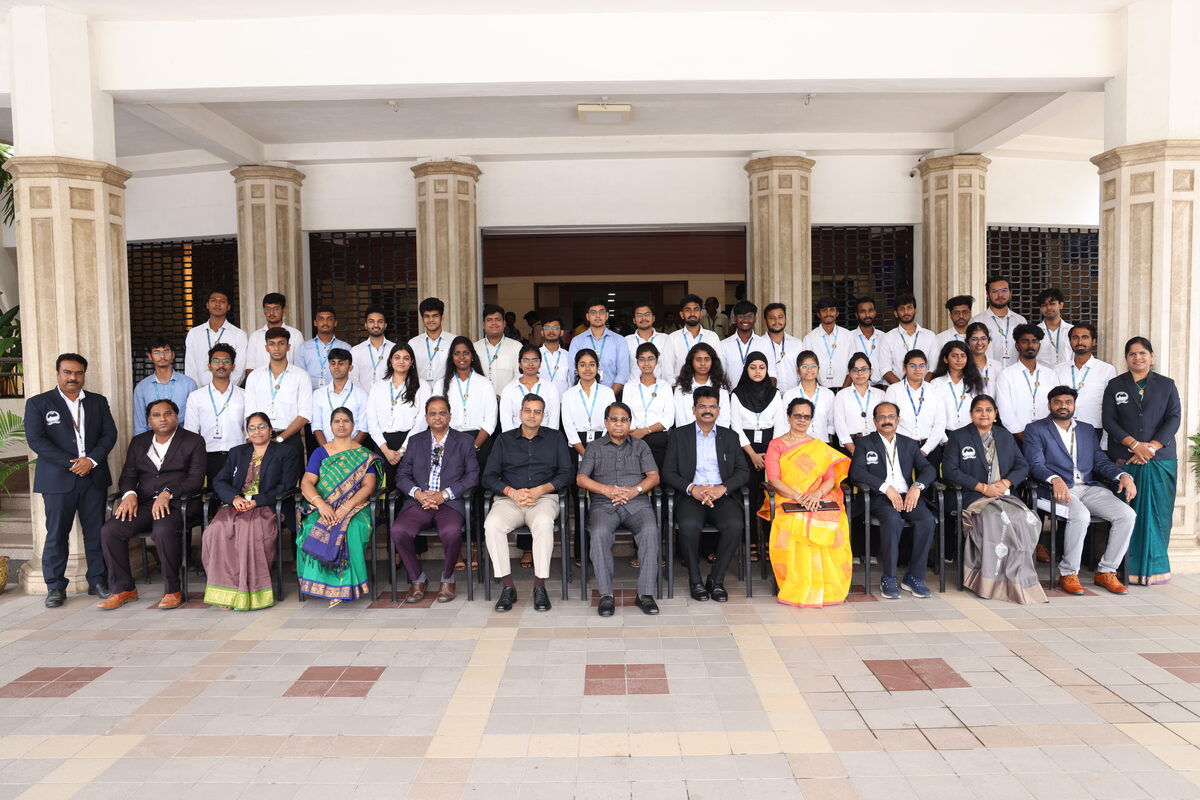
Learning how a large institution actually makes decisions.
Being elected Member Secretary meant representing over 35,000 students in the rooms where university policy actually gets negotiated, not just announced. It was a different kind of engineering problem, understanding competing interests and finding a version of a decision that most people could actually live with.
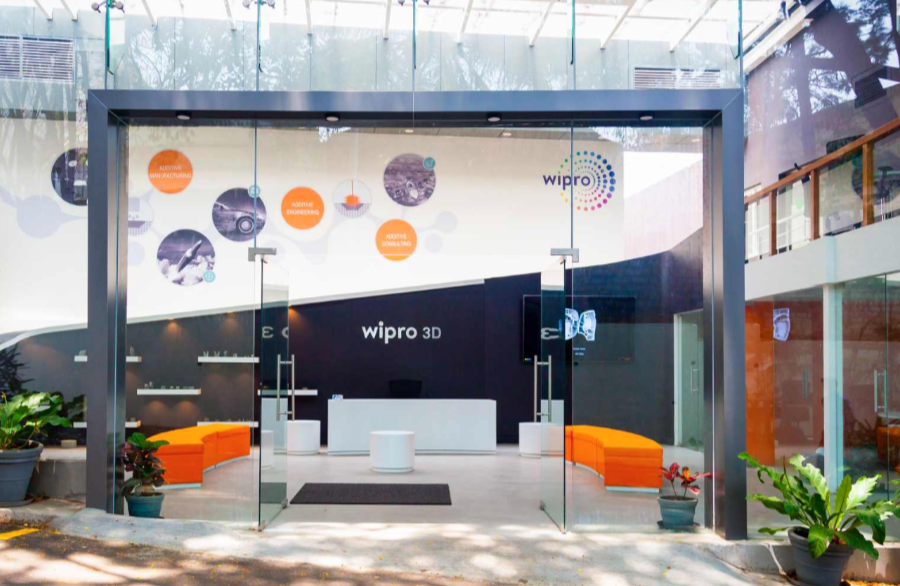
Learning that the barrier to adoption is often not the technology, it is the logistics around it.
At Wipro's additive manufacturing division, the printer itself worked fine, the problem was that a 60 kilogram machine could not be carried to a client demo. I built an IoT-enabled AR application that let the sales team demonstrate it remotely instead, full machine functions, component assemblies, specifications, without moving the machine at all. A key lesson I learnt was that system's value is bottlenecked entirely by the logistical friction required to access, integrate, and deploy it.
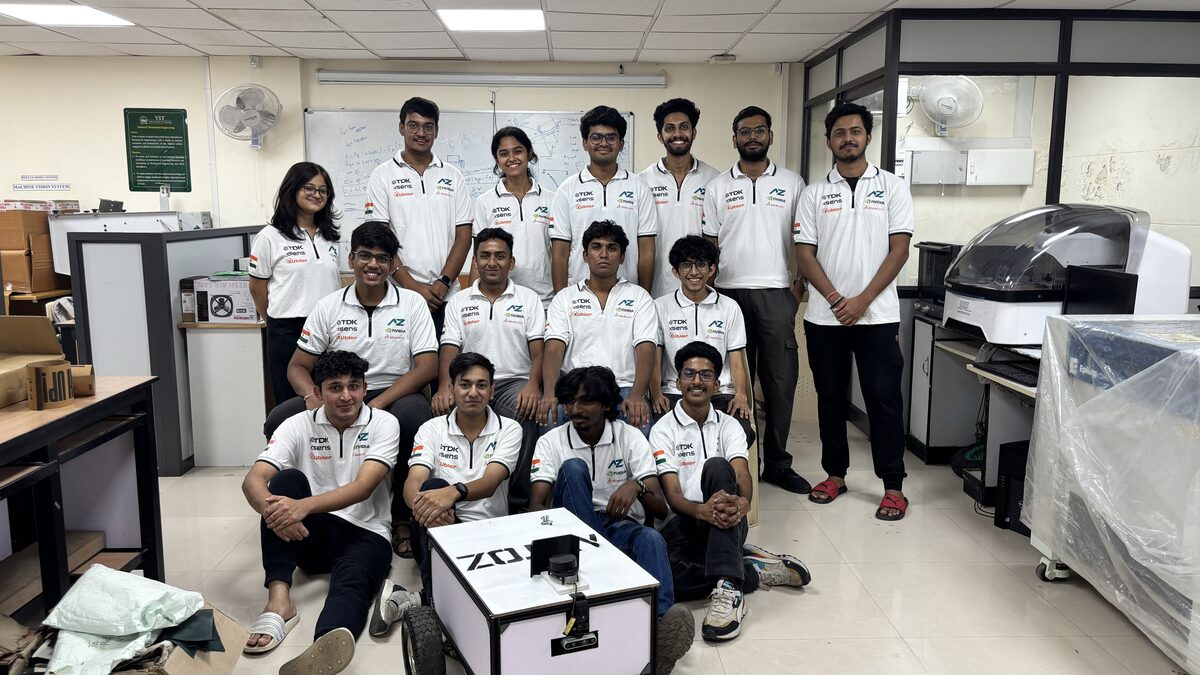
Learning to be responsible for other people's work, not just my own.
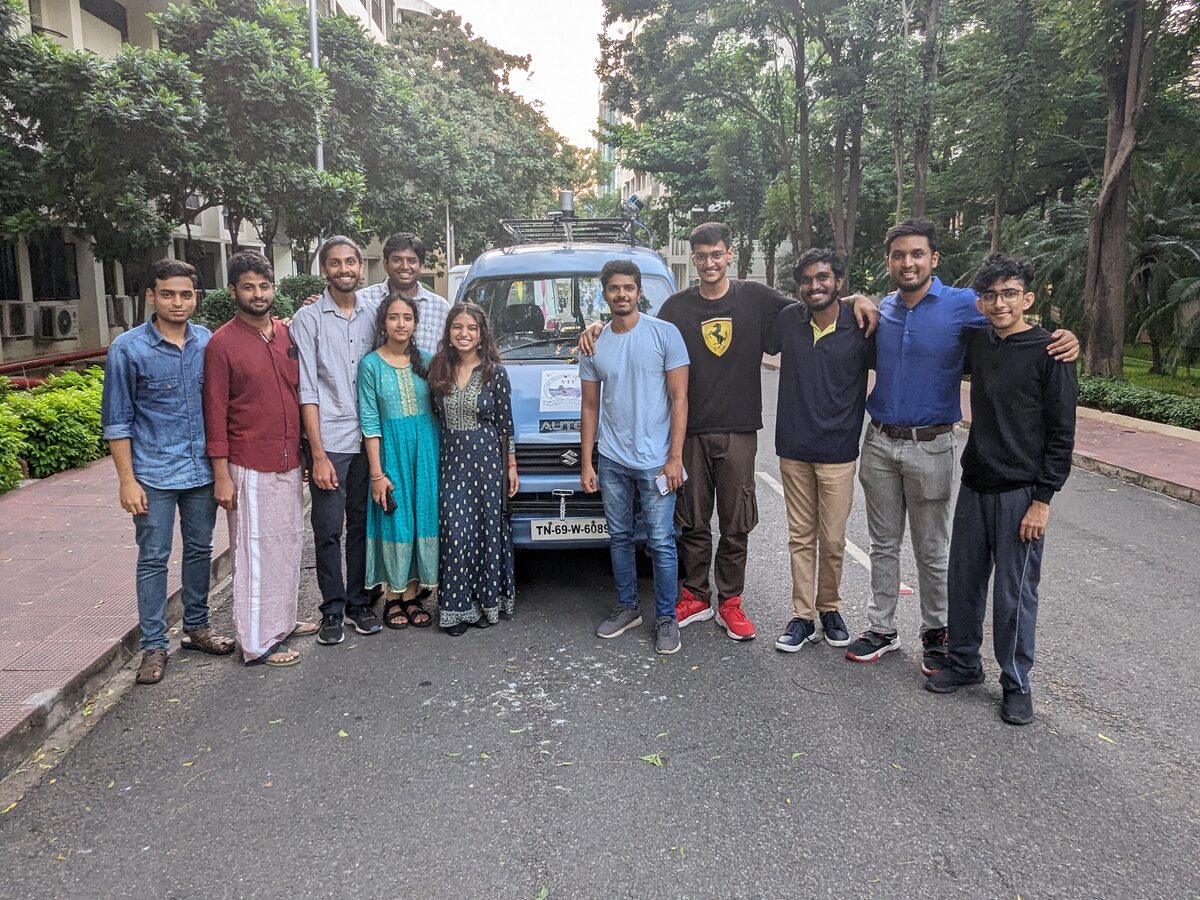
As Mechanical Head, my job stopped being about the parts I personally built and became making sure every subsystem someone else built would actually integrate together before we shipped the vehicle to Michigan for the IGVC competition. A different skill from anything before it.
Learning to build something that runs without me in the room.
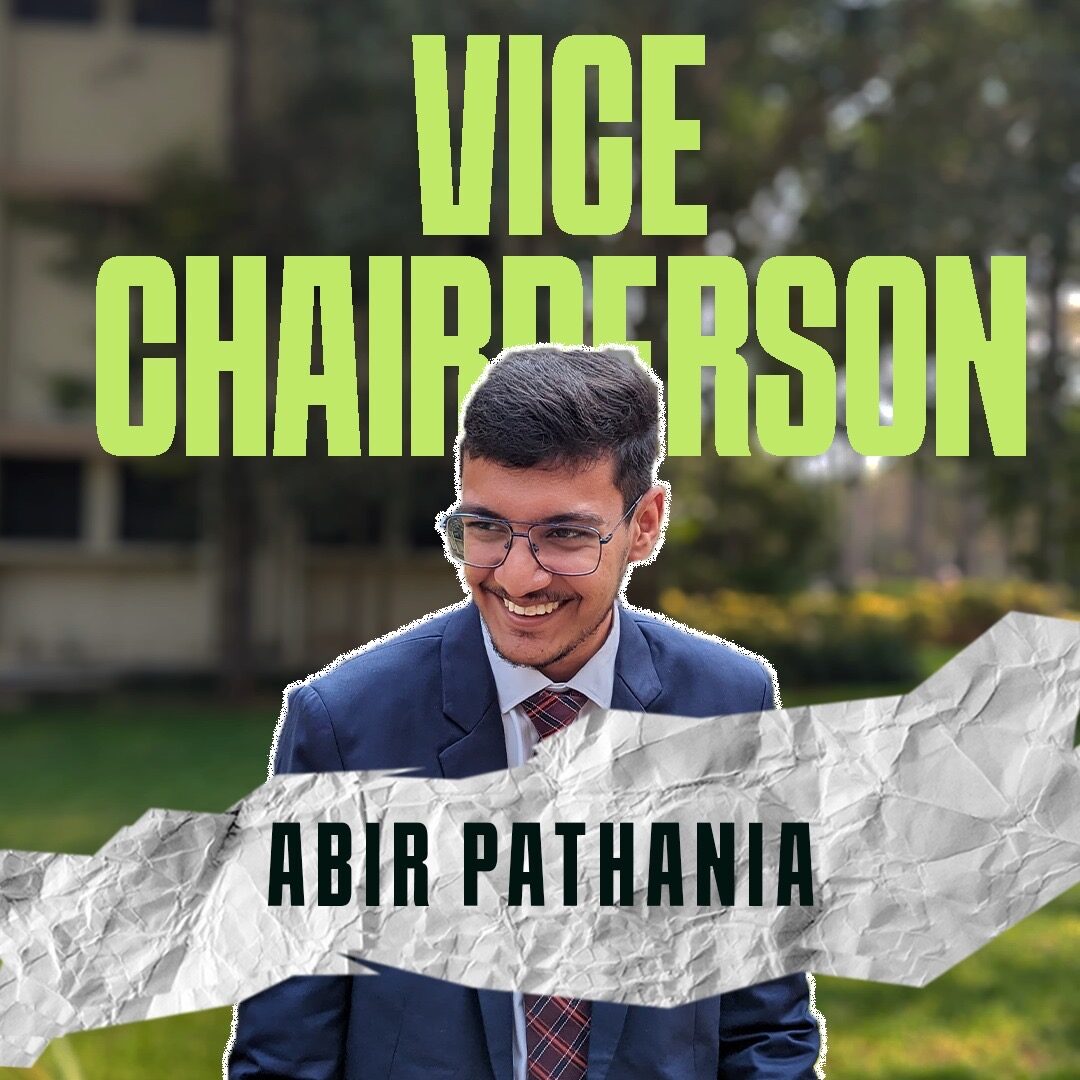
As Vice Chairperson of the Additive Manufacturing Society of India's VIT chapter, I was organising British Council and Erasmus funded events for a community of over a thousand students. Most of the actual job was building the systems and structure so the chapter kept functioning even when I personally was not the one executing every task.
Learning to hold two constraints that fight each other, at once.
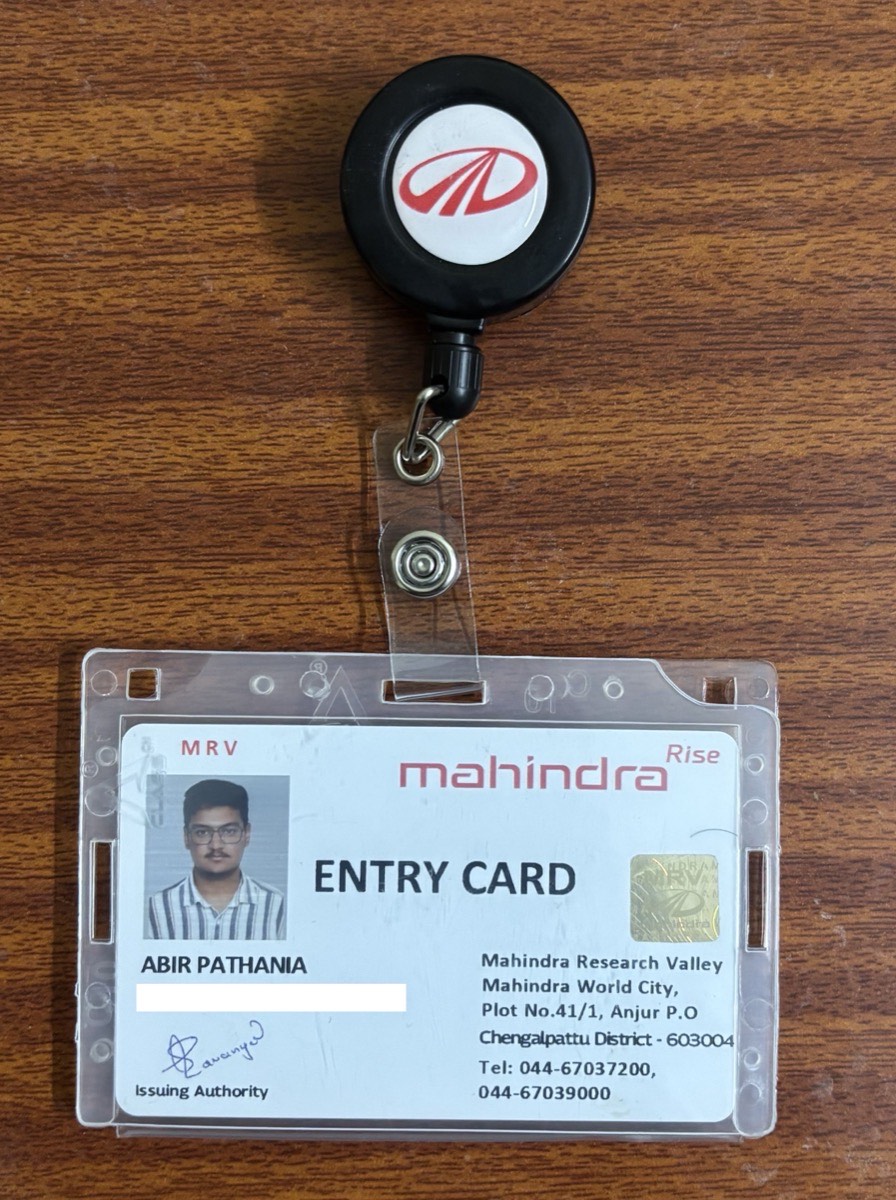
At Mahindra's Research Valley I led a value engineering initiative on a tailgate assembly, working across manufacturing, design and logistics teams and three prototype cycles to cut 4 kilograms of component weight without letting NVH compliance drop below 25 Hz. Removing weight and keeping a structure quiet under vibration usually pull against each other. Holding both at once, across real suppliers and real tooling constraints, was a different kind of problem than anything in a classroom. I also wrote a small Python model to replace a validation calculation I had been redoing by hand, cutting sign off time in half. Both were the same lesson from different angles, real constraints do not negotiate, so the tool has to be exact.
Learning I would rather build the company than advise someone else on theirs.
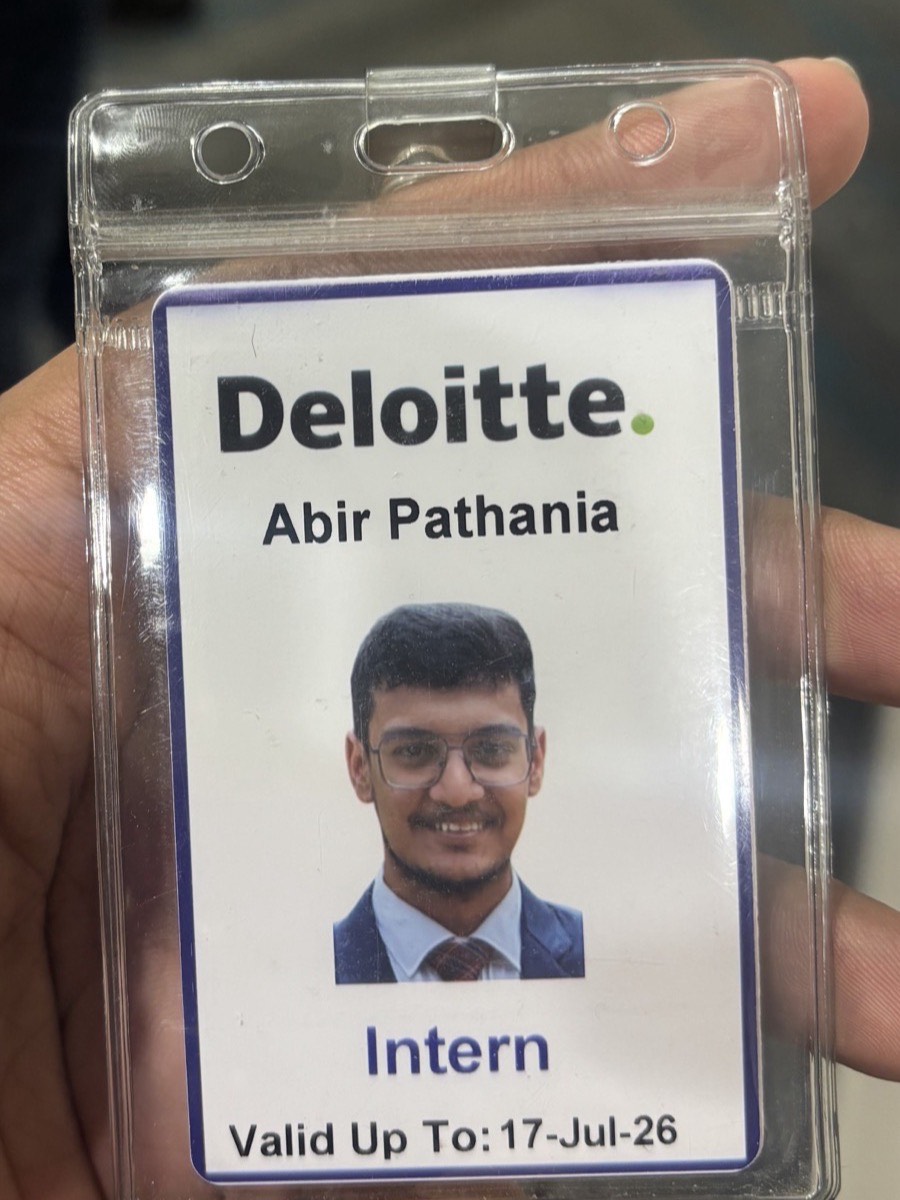
At Deloitte USI, I taught myself to build agentic AI systems with no prior background, because the supply chain problems in front of me kept needing tools that did not exist yet. Six systems in six months: a RAG knowledge platform that cut data retrieval time by 60%, two integration agents that got Teamcenter and Windchill talking to Polarion for the first time, a BOM validation agent that cut coordination effort by 40%, and an analytics layer tying it all together. None of it was in my job description. I left in July 2026 to build Patroclus Systems full-time.
Patents Granted.
Two government-registered industrial designs focused on practical systems.
Aeroponic Farming Device
Closed-loop IoT-enabled aeroponic system designed for high-yield growth with up to 95% lower water usage.
Solar Dryer and Seed Germinator
Solar-integrated precision dryer and germination system with IoT automation for better process control.
Built teams, not just systems.
Mechanical Head, Team AutoZ
Led mechanical design and systems integration. Represented India at IGVC 2023 in Michigan.
Vice Chairperson, AMSI VIT Chapter
Led a 1,000+ student community and organised British Council and Erasmus-funded events.
Member Secretary, Students Council
Highest student governance role at VIT Vellore, representing 35,000+ students.
What people I worked with said.
Recommendation highlights from collaborators across engineering and product teams.
I had the pleasure of working closely with Abir during his internship, where I had the opportunity to mentor him across multiple AI projects. Watching his growth over that time was incredibly rewarding.
From the very beginning, Abir stood out for his curiosity, problem-solving ability, and eagerness to take on challenging problems. He has a knack for breaking down complex requirements into practical, well designed solutions. Whether it was rapidly building a proof of concept to validate an idea or scaling it into a more robust solution, he consistently delivered with speed and thoughtfulness.
What impressed me most was his ownership and willingness to learn. He was always open to feedback, picked up new concepts quickly, and continuously looked for ways to improve both the solution and his own skills. His positive attitude and collaborative approach made him a pleasure to work with, and he earned the trust of everyone on the team.
I'm confident Abir has a bright future ahead in product development. He brings together strong technical skills, sound engineering judgment, and a genuine passion for solving real world problems. I would gladly recommend him to any team looking for someone who is capable, driven, and eager to make an impact.
I have known Abir since college, first as my junior and later as a close friend. What distinguishes him is his refusal to walk away from a difficult problem. He stays with it, approaches it from unexpected angles, and keeps working until he finds a practical solution. He remains remarkably positive under pressure and can manage several demanding priorities without compromising the quality of his work. Abir has the persistence, resourcefulness, and execution mindset I would look for in an early-stage founder.
I have known Abir Pathania since the first semester of his undergraduate studies at VIT Vellore, first as his instructor and later as his research advisor. What distinguishes Abir is his ability to transform ideas into practical, high-impact engineering solutions. During our research collaboration, he contributed to ASTM-based degradation studies on thermoplastic composites, led key aspects of a CFD-based inlet valve optimization project that achieved a 20.3% improvement in oxygen content without compromising thermal efficiency, and co-filed two patent applications on an IoT-based Solar Dryer and an Integrated Aeroponics System. Beyond research, he demonstrated leadership through the VIT Students' Council and Team AutoZ, consistently delivering results under demanding timelines. Abir combines technical excellence with an entrepreneurial mindset, resilience, and strong execution skills, qualities that make him exceptionally well-suited to build and scale innovative startup ventures.
Let us build what should exist.
If you are an investor, potential co-founder, defence stakeholder, or research partner, reach out directly.